

Temptation Bundling: Pair Dreaded Tasks with Rewards
You know the task is waiting. The inbox needs clearing, the laundry pile is growing, and the report is half written — yet you have spent twenty minutes rearranging your desk instead. The task feels boring or uncomfortable, so your brain looks for any excuse to avoid it.
Temptation bundling changes the deal. You pair the dreaded task with something you genuinely enjoy, and you only get the fun part while you are doing the hard part. Below: what it is, why it works, and how to build bundles that stick.
What Is Temptation Bundling?
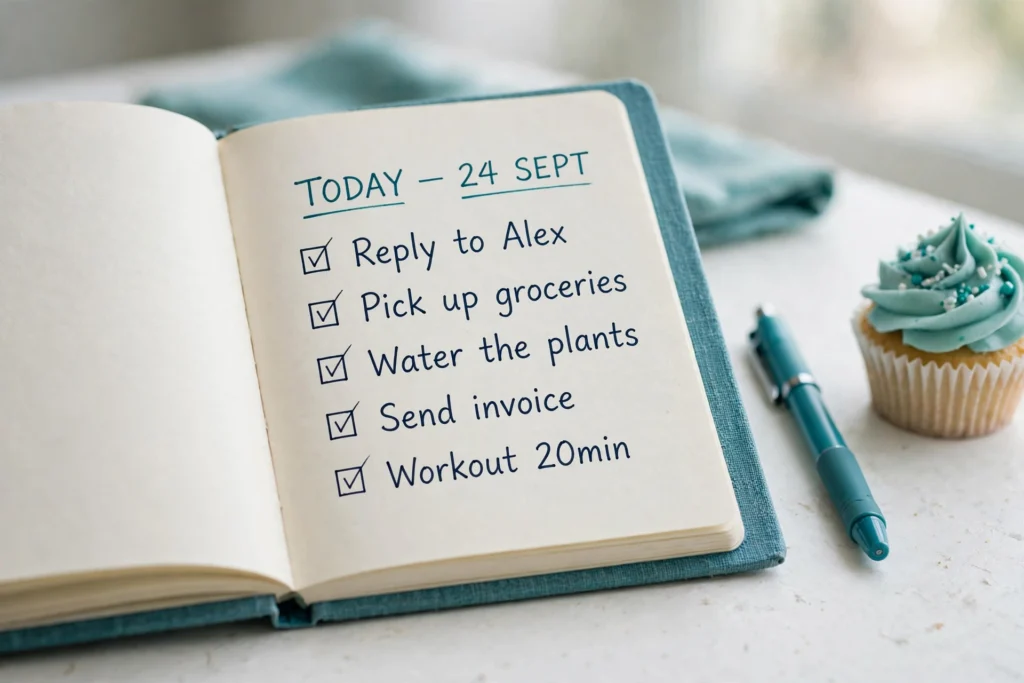
Temptation bundling means linking something you want to do with something you keep putting off. The two happen at the same time, or one directly follows the other. The enjoyable activity is the reward, and the dreaded task is the condition for getting it.
For example: a favorite podcast only while folding laundry, a beloved show only while walking on the treadmill, your favorite coffee only on run mornings, an audiobook only while cleaning the kitchen. The fun thing is not banned forever. It is simply reserved for the moment you are doing the hard thing.
A dreaded task becomes one you almost look forward to, because it now comes with something pleasant attached.
It is not a reward after the task, where you suffer first and enjoy yourself later — in a bundle, the enjoyment happens during the task, so the work feels lighter in the moment. It is also not multitasking, which splits attention between two things that both need thinking. A good bundle pairs a hands-busy task with something for your ears only. Folding laundry while listening to a story works; writing a report while watching a show does not. The test is simple: if both can happen at once without either getting worse, it is a good bundle.
Why Temptation Bundling Works
Procrastination is rarely about knowing what to do. The problem is how the task feels: boring, tiring, or stressful, so starting feels unpleasant right now.
Temptation bundling changes how starting feels. When a boring task comes with something enjoyable, the dread drops: your brain anticipates the pleasant part, not just the unpleasant one, and beginning gets easier.
It also removes the decision. Many dreaded tasks are hard because every time you face them, you must decide to do them — a fresh battle every day. A bundle turns it into a habit instead. When the rule is “podcast only while folding laundry,” you no longer debate whether to fold the laundry. You want to hear the next episode, so you pick up the basket. Wanting pulls you forward instead of discipline having to push you.
Each completed bundle gives you two wins at once: the task moves forward and you enjoyed something. That double win makes you more likely to repeat it tomorrow, until a daily struggle becomes a routine you barely think about.
How to Build Your First Temptation Bundle

Building a bundle takes ten minutes of thinking and a little honesty. Follow these five steps.
Step 1: Pick one dreaded task
Choose one task you keep avoiding, and be specific: “fold and put away laundry,” not “clean the house.” Pick a task that repeats often — chores, workouts, study, routine work. Start with just one.
Step 2: List things you genuinely enjoy
Write down ten things you enjoy that could happen alongside your task: audiobooks, podcasts, music, favorite shows, a special drink, a favorite snack, or a call with a friend. Be honest about what you actually love, not what you think you should love — a podcast you do not enjoy will not pull you toward the laundry.
Step 3: Match the reward to the task
Check it with two questions. Can you do both at once without either getting worse? Listening to a story while cooking works; watching a video while studying does not. Does the reward fit the task’s length? A twenty-minute episode fits a twenty-minute tidy-up; a two-hour movie does not. If a pairing feels forced, try a different one.
Step 4: Make the rule clear and strict
Write your rule in one sentence: “I only listen to my favorite podcast while I fold laundry.” The word “only” matters — if you listen on the couch too, the podcast stops being a reason to do the laundry. This strictness is the hardest part, and it is what makes the method work. If it feels too hard at first, keep the rule for one specific show only, and tighten it later.
Step 5: Set it up so starting is easy
Make the bundle ready before you need it: download the episode the night before, put the basket where you can see it, keep shoes and earbuds by the door. A bundle needing ten minutes of setup rarely happens; a ready one happens almost by itself.
Fifteen Temptation Bundle Ideas to Steal
- Laundry and podcasts: your favorite show only while folding clothes.
- Dishes and audiobooks: a gripping audiobook only on washing-up evenings.
- Walking and a series: one episode only while walking.
- Running and new music: a special playlist you only play on runs.
- Cleaning and a phone call: call a friend while you tidy the house.
- Cooking and a show: a show in the background while prepping meals.
- Admin and a favorite coffee: your best coffee only on paperwork mornings.
- Studying and a special snack: a snack you love, eaten only while you work.
- Commuting and learning: an audiobook or language lesson for the commute.
- Gym and a show: a series you watch only at the gym.
- Ironing and a comedy show: a funny show saved for the ironing pile.
- Gardening and music: a playlist you only play in the garden.
- Budgeting and a treat: a favorite drink with your weekly money check-in.
- Writing and a cozy setup: a candle and tea only when you sit down to write.
- Stretching and a playlist: calm music you love only during your evening stretch.
Most use audio: it leaves hands and eyes free, so it pairs with almost any physical task.
Rules That Keep Temptation Bundling Working
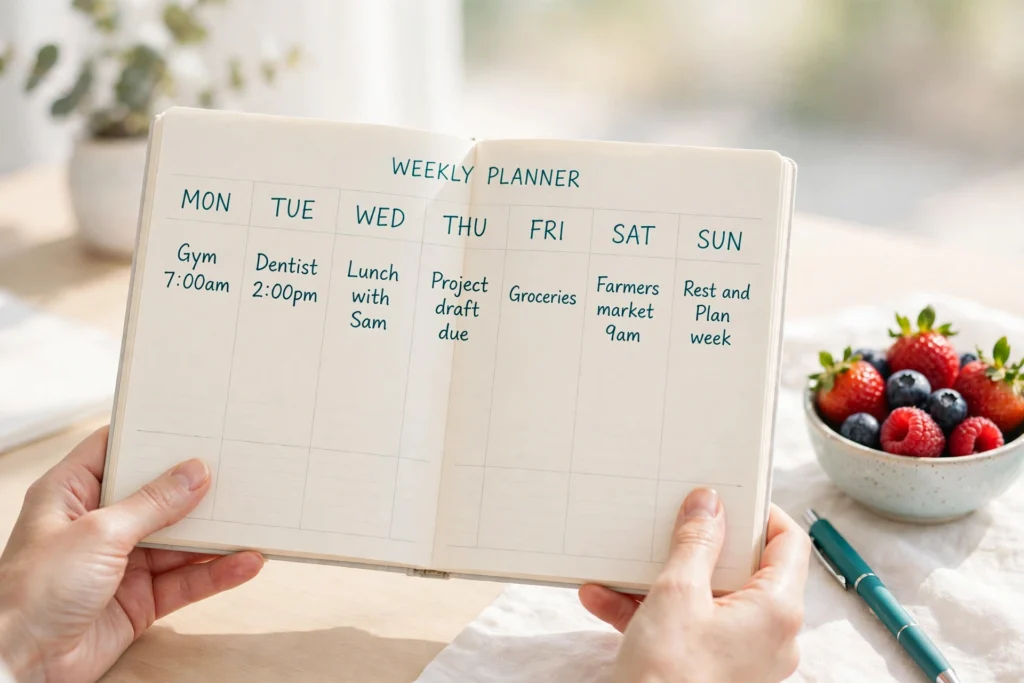
Keep the reward exclusive. The reward only happens with the task. If it leaks into the rest of your day, it stops pulling you toward the task.
Keep the task small. Bundles suit tasks of fifteen to forty-five minutes. Break bigger tasks into pieces and bundle one at a time.
Never bundle two hard things. One side must be enjoyable. If both sides feel like work, the bundle falls apart.
Refresh the reward. Even a favorite show gets stale. When a reward stops exciting you, swap it for a new one.
Forgive a slip and restart. You will break the rule sometimes. Notice it and restart the next day — success comes from restarting quickly, not from never slipping.
Common Mistakes to Avoid
A reward you do not really want. Pick the show you actually love, not a “worthy” podcast you feel you should enjoy.
Two tasks that both need focus. Watching a show while writing an important email is a distraction, not a bundle — both will suffer.
A bundle that is too complicated. If it needs special equipment or a long setup, it will not survive a busy week. The best bundles start in under a minute.
Food as the only reward. A snack is fine sometimes, but if every bundle ends with food, the system gets expensive and unhealthy. Mix in audio, shows, and calls.
Bundling everything at once. Five bundles in one week usually ends with all five falling apart. Start with one, then add a second.
Your 7-Day Temptation Bundling Starter Plan

Day 1: Choose. Pick one dreaded task and one reward you love. Write the rule in one sentence and put it where you will see it.
Day 2: Prepare. Download the episode, lay out the shoes, make the playlist.
Day 3: Try it once. Do the bundle start to finish, then adjust if the reward or pairing felt off.
Day 4: Repeat. Do the same bundle again. It feels easier the second time, because you know what to expect.
Day 5: Tighten the rule. If you enjoyed the reward without the task, gently close that gap.
Day 6: Notice the change. Most people find the dread has dropped, even after less than a week.
Day 7: Decide. Keep the bundle, swap the reward, or add a second one. Miss a day? Just pick up where you left off.
Practical Tips for Making Bundles Stick
Put the reward where you can see it: the podcast app on your home screen, the walking shoes by the door. Tell someone about your bundle — saying the rule out loud makes it feel real, and a friend can ask about it. Track it simply, with a tick on a calendar each time you complete a bundle. Pair bundles with your existing routine, like the commute or the after-dinner tidy, rather than finding a new slot in your day. And keep experimenting until you find the combinations that click. The right bundle feels almost effortless.
Frequently Asked Questions
What is temptation bundling in simple terms?
It means pairing something you want to do with something you keep avoiding, so you only get the fun part while you do the hard part. For example, you listen to a favorite podcast only while you fold laundry.
Does temptation bundling really work for procrastination?
It helps many people because it changes how a dreaded task feels instead of relying on willpower alone. It works best when the rule is kept consistently and the reward is something you genuinely enjoy.
Can I use temptation bundling for studying or work?
Yes, with care. It suits routine work like clearing emails or filing. For deep study that needs full focus, choose a reward that does not compete for attention, like a special snack or a cozy workspace, rather than a show.
What if I break the rule and enjoy the reward without the task?
Treat it as a small slip, not a failure. Restart the bundle the next time the task comes up. The link grows stronger each time you keep the rule, and one slip does not undo your progress.
How is temptation bundling different from a reward after a task?
A reward after a task can help, but the task still feels miserable while you do it. In temptation bundling, the enjoyment happens during the task, so the work feels better in the moment.
Keep Going: Related Guides
Temptation bundling works even better alongside other simple focus methods:
- The 10-Minute Rule: Start Dreaded Tasks — a gentle way to begin any task you have been avoiding.
- Eat the Frog: Do the Hardest Task First — a morning method for tackling the task that matters most.
- The 2-Minute Rule: Clear Small Tasks Instantly — a rule for stopping small tasks from piling up.
- Habit Stacking: Attach New Habits to Old Ones — anchor a new habit to a routine you already have.
- Dopamine Detox: Reset Your Brain’s Reward System — how to make simple rewards feel rewarding again.
- The Pomodoro Technique: 25 Minutes of Deep Focus — short, timed focus sessions with built-in breaks.
- Deep Work: Focus Without Distraction — how to protect long stretches of focused work.
- Timeboxing: Assign Every Hour a Job — plan your day in blocks so bundles have a set time.